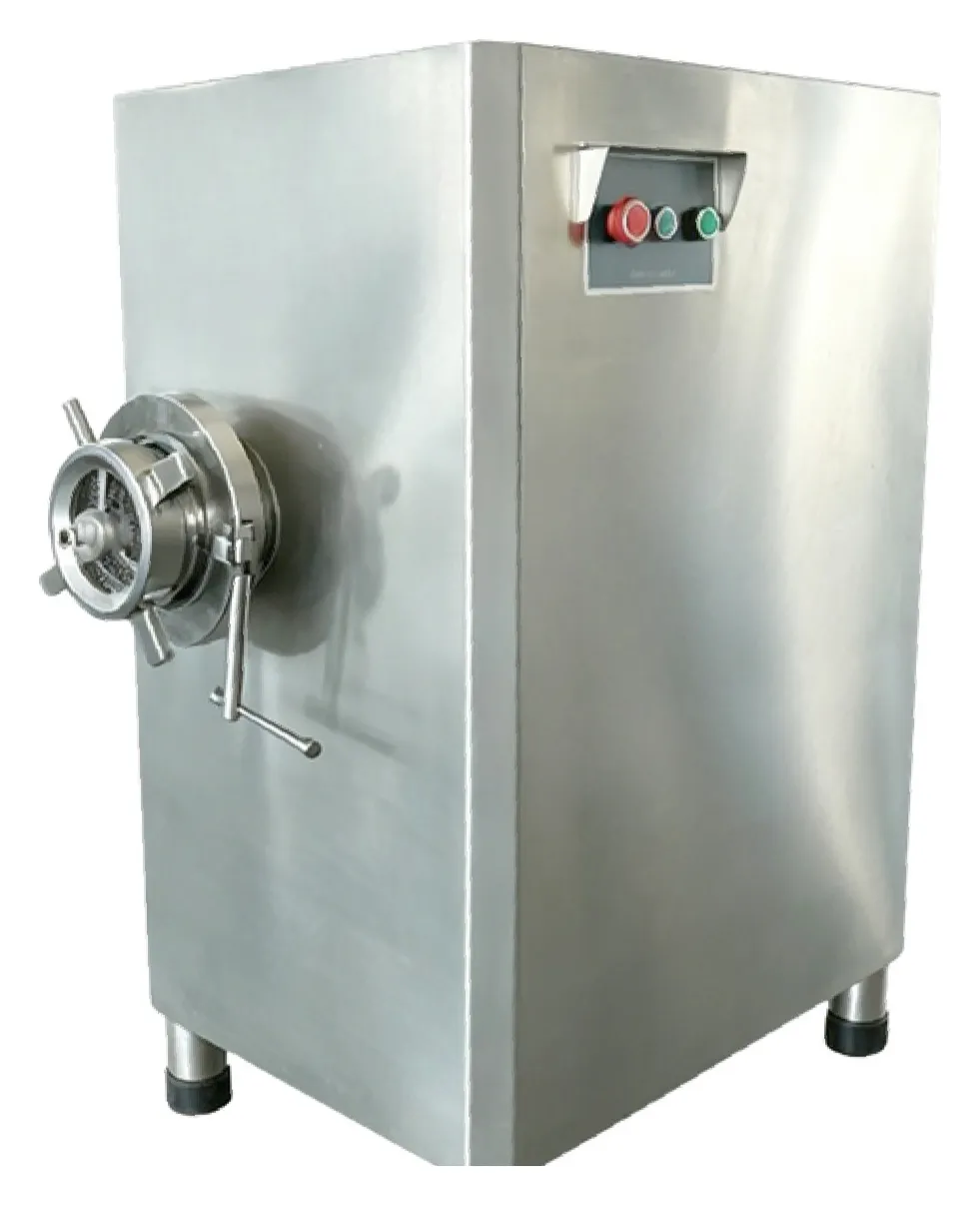
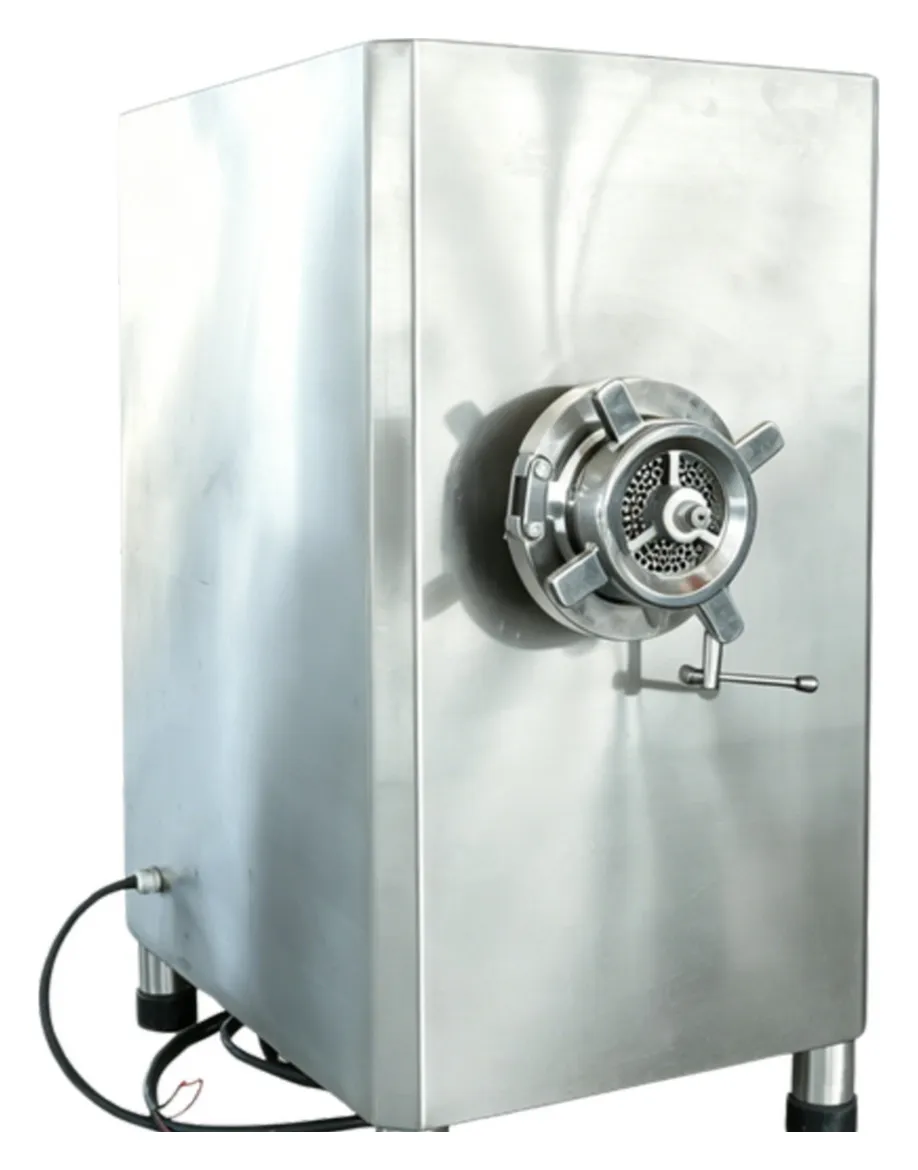
Industrial Frozen Meat Grinder JR-D Series
A heavy-duty grinder that minces frozen meat blocks directly, without thawing, as well as fresh meat, from 1 to 12 t/h.
- No thawing, so meat keeps its nutrition and freshness
- Direct drive without gearbox for low failure rate
- Prepares meat for chopping and mixing
Overview
Grind frozen blocks straight from the cold store
An industrial frozen meat grinder turns frozen meat blocks into ground meat without a thawing step. That saves hours of tempering time and cold-room space, and it avoids the drip loss, nutrient loss and hygiene risk that come with thawing large quantities of meat.
The JR-D series minces blocks at minus 18 C directly into particles of different sizes. Muscle fibre is not damaged and the temperature rise is small, which keeps the meat fresh and helps extend shelf life. The same machine also grinds fresh meat, so one grinder can serve the whole preparation area.
Three models cover 1 to 12 tonnes per hour, from small processing plants to large sausage and ham lines. The whole machine is made of stainless steel, with a powerful motor and direct drive without a gearbox for a low failure rate and high efficiency.
How the frozen meat grinder works
Grinding frozen meat asks more of a machine than grinding fresh meat. The steps below show how the JR-D series handles it.
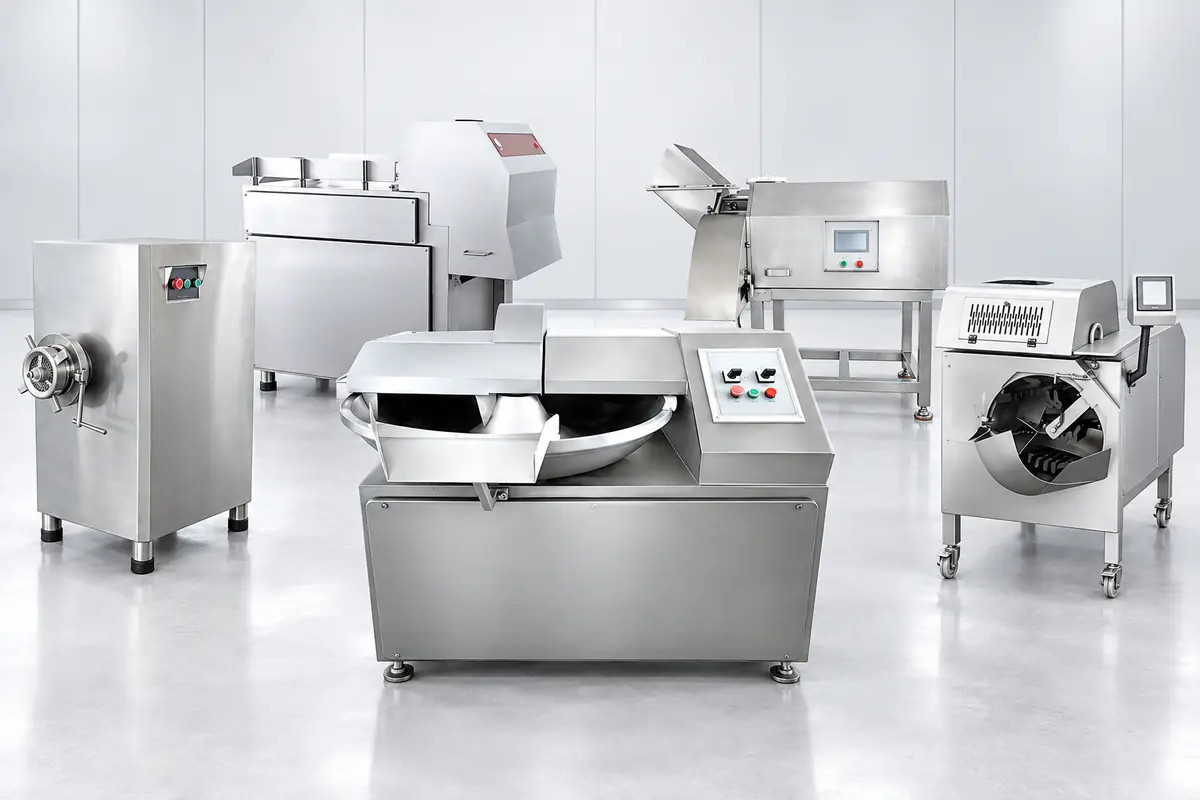
Key features
Technical specifications
| Parameter | JR-D120 | JR-D200 | JR-D300 |
|---|---|---|---|
| Capacity | 1.0 to 1.5 t/h | 2.0 to 3.0 t/h | 6 to 12 t/h |
| Power | 7.5 kW | 37 kW | 55 kW |
| Power supply | 380 V, 50 Hz | 380 V, 50 Hz | 380 V, 50 Hz |
| Auger speed | 45 rpm | 170 / 260 rpm | 47 rpm |
| Weight | 300 kg | 1,750 kg | 2,100 kg |
| Dimensions | 950 x 550 x 1050 mm | 1800 x 1500 x 1700 mm | 2280 x 1210 x 1800 mm |
Plate sizes and final data are confirmed in the formal quotation.
How to choose the right model
Choose the grinder by the tonnes per hour your plant needs at its busiest shift, not its average. The JR-D120 at 1 to 1.5 t/h suits small and medium plants, the JR-D200 at 2 to 3 t/h suits most sausage lines, and the JR-D300 at 6 to 12 t/h serves large plants or lines that feed several bowl cutters and mixers.
Block size and temperature also matter. Very large or very hard frozen blocks can be pre-cut with a frozen meat block cutter before grinding, which reduces load on the grinder and keeps output steady. Share your block dimensions and storage temperature so we can confirm the setup.
Applications
Where the grinder fits in your line
The frozen meat grinder is usually the first machine in a meat preparation area. Frozen blocks go in, and ground meat goes on to the bowl cutter for emulsion products, to the vacuum mixer for coarse products, or straight to forming and filling.
Because it sits at the start of the line, the grinder should keep ahead of the machines after it. A bin lifter at the hopper and 200 L meat carts at the outlet keep material moving between stations with less manual lifting.
Operation, cleaning and maintenance
Operators load the hopper, start the auger and change hole plates to switch particle size. Always follow the operating manual for safe loading, especially with large frozen blocks.
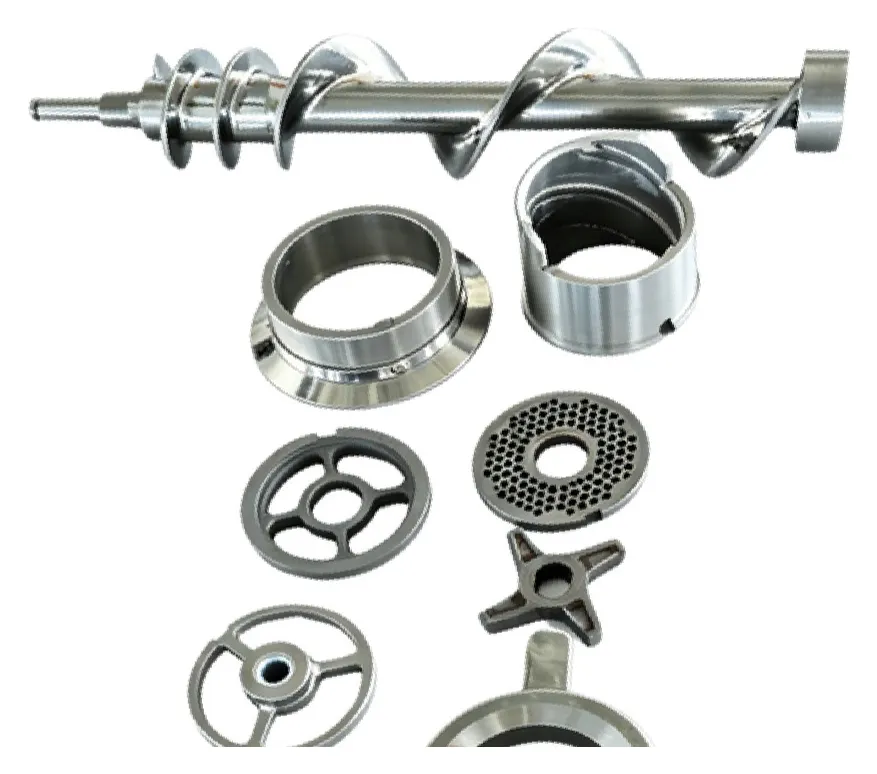
The auger, knives and plates can be removed for cleaning after each production day. Knives and plates are wearing parts and should be checked and sharpened or replaced regularly for a clean cut. One set of wearing parts ships with every machine.
Information to include in your inquiry
- Frozen block size and storage temperature
- Target output per hour at peak production
- Required particle sizes and hole plates
- Downstream machines: bowl cutter, mixer or forming line
- Voltage, frequency and destination country
Frozen grinding compared with thawing first
Many plants still temper frozen blocks for a day or more before grinding. Grinding frozen meat directly changes that workflow in several ways.
| Point | Thawing before grinding | Direct frozen grinding |
|---|---|---|
| Time | Hours to days of tempering | Blocks go straight from the cold store |
| Space | Cold-room space for thawing racks | No thawing area needed |
| Drip loss | Meat juice lost during thawing | Minimal loss of nutrients and protein |
| Temperature control | Meat warms during handling | Low temperature rise keeps meat fresh |
| Planning | Production planned a day ahead | Grind to order from frozen stock |
Direct frozen grinding also makes it easier to control batter temperature later in the bowl cutter, because the ground meat leaves the grinder cold.
For plants that switch between products during the day, keeping a set of hole plates at the grinder makes it quick to change particle size between batches.
Om Argentina Ever Power
The industrial frozen meat grinder is one part of a complete range that we supply for sausage and meat processing plants.
Argentina Ever Power Meat Processing Equipment Co., Ltd. supplies industrial sausage and meat processing machinery, from single machines to coordinated processing lines, to meat processors and food factories. Our head office is at Salta 2033, (2400) San Francisco, Córdoba, Argentina.
The range covers six equipment categories: cutting, grinding and dicing; injection, mixing and tumbling; sausage filling; clipping and tying; smokehouses and heat treatment; and material handling. Because the machines are designed to work together, one supplier can match the output of each station, from frozen raw material to the smoked finished product.
Every machine ships with one set of wearing parts and a 12-month warranty on the complete machine. Machines can be adapted to your product, casing and power supply, and our after-sales team supports the equipment through its working life with follow-up visits.
Whether you need one machine or a complete line, our engineers review your process data before recommending a model, so the equipment you receive matches the product you make and the output you need.
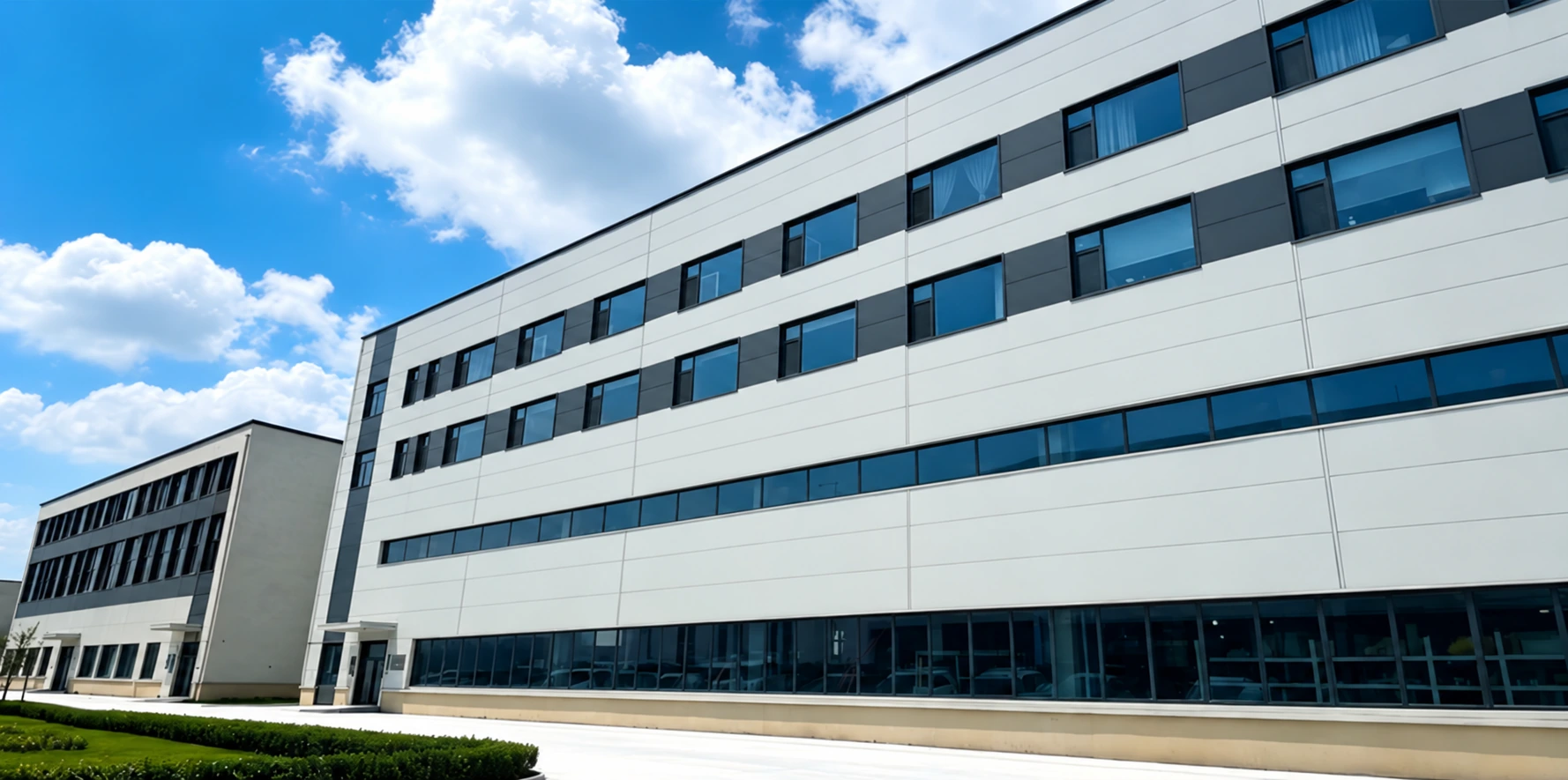
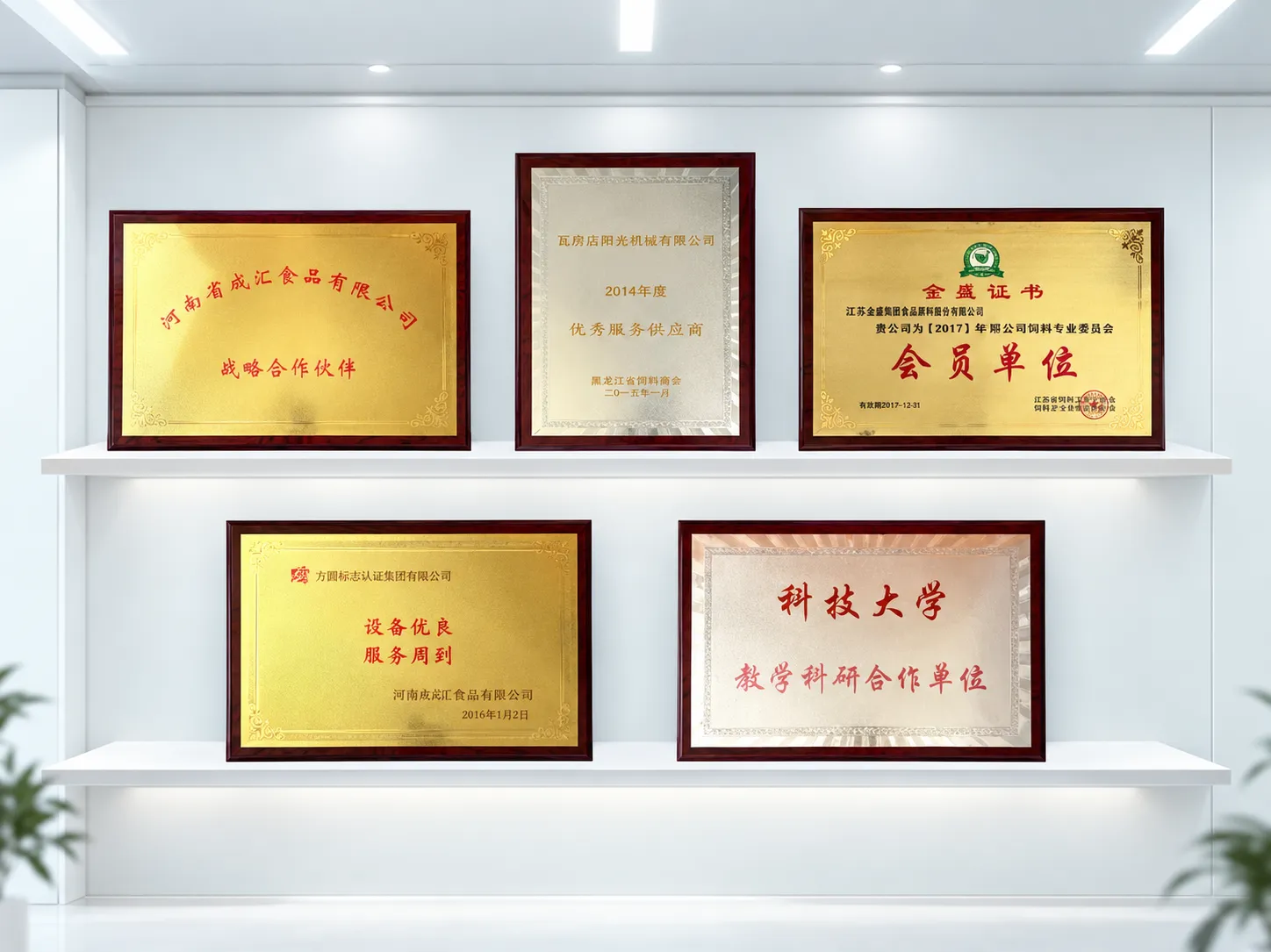
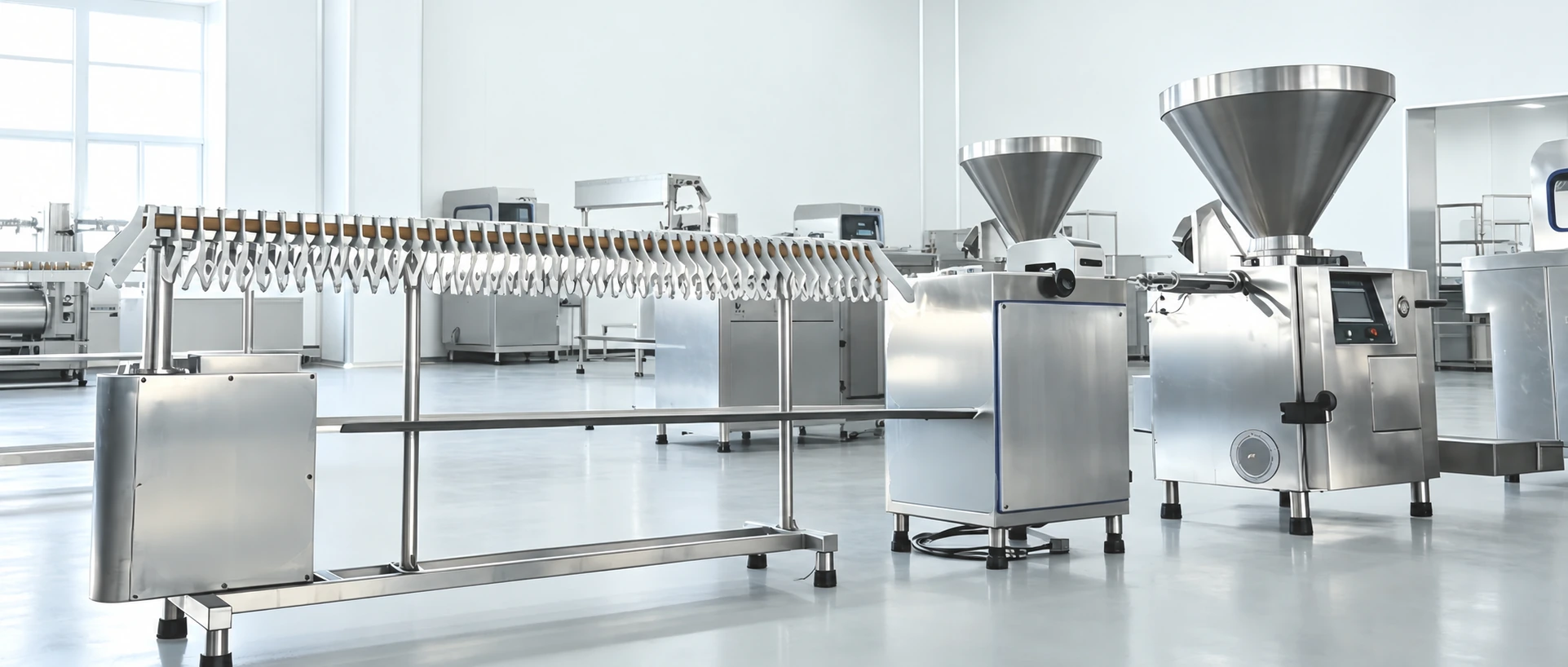
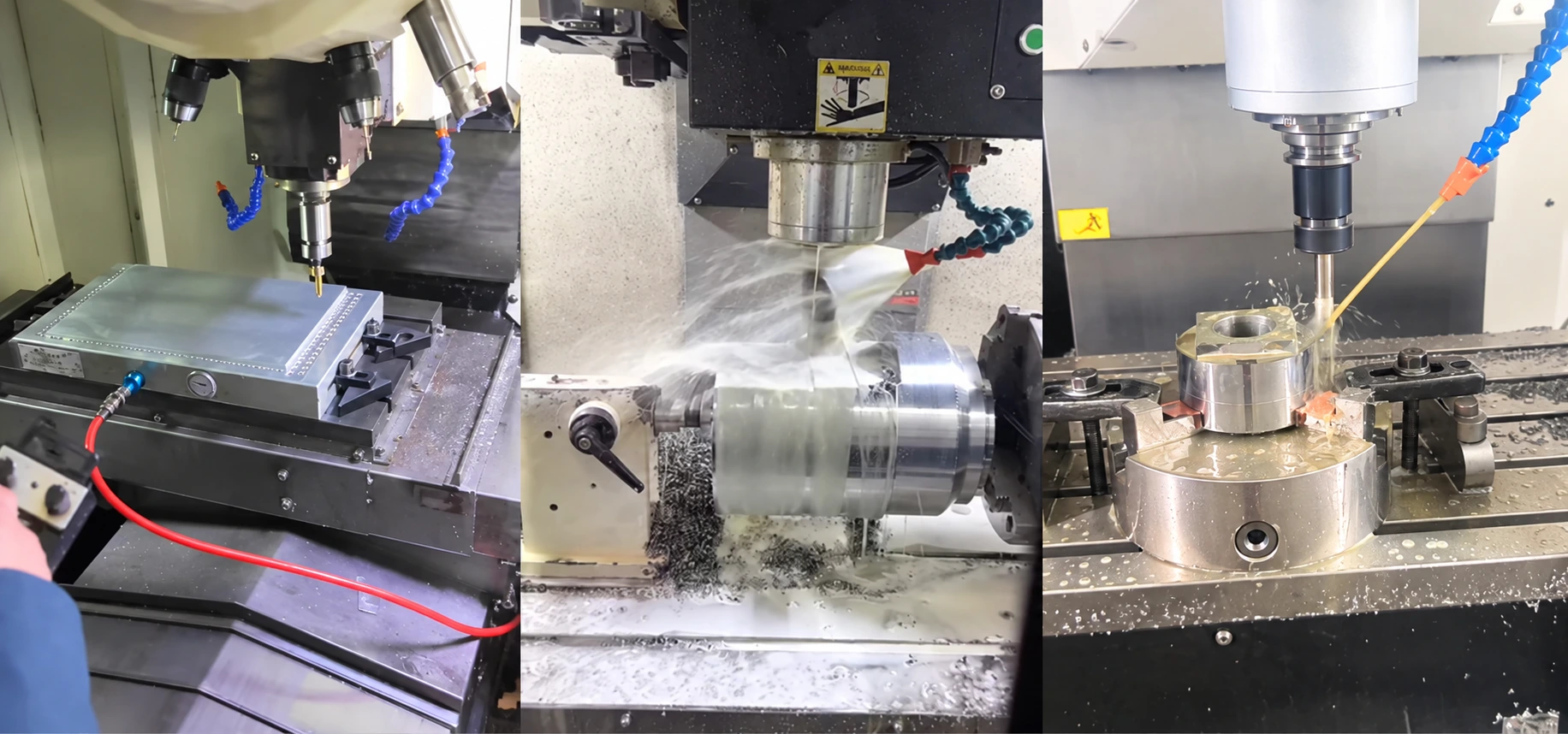
Key machine components are produced on CNC machining centers, and complete lines are set up and run in our testing showroom, where customers can see how filling, linking, hanging and smoking equipment work together. The company has also received recognition from industry associations, customers and a university research partner.
Grinding frozen blocks every day?
Tell us your block size, temperature and hourly output. We will match the grinder model and plates.
Frequently asked questions
How cold can the meat be?+
The JR-D series grinds frozen meat at minus 18 C directly. For very large blocks, a frozen meat block cutter can pre-cut them first.
Can the grinder also process fresh meat?+
Yes. The same machine grinds both frozen and fresh meat. Plate size is chosen to suit the product.
Which model fits my plant?+
Choose by hourly output: about 1 to 1.5 t/h for the JR-D120, 2 to 3 t/h for the JR-D200 and 6 to 12 t/h for the JR-D300.
Why is direct drive an advantage?+
Driving the auger directly without a gearbox removes a common wear point, which gives a lower failure rate and less maintenance.
Which hole plates are supplied?+
Plate sizes are confirmed in the quotation according to your products. Tell us the particle sizes you need.
What comes with the machine?+
Each grinder ships with one set of wearing parts and a 12-month warranty on the complete machine.
Does grinding frozen meat wear the machine faster?+
Frozen grinding puts more load on the auger, knives and plates than fresh meat, which is why the JR-D series uses a powerful direct drive. Knives and plates are wearing parts and should be checked regularly; one set ships with the machine.